Category: Blog

Your blog category

  • Mobile Phones and Drunk Driving: The Two Most Preventable Causes of Road Accidents

    Mobile Phones and Drunk Driving: The Two Most Preventable Causes of Road Accidents

    Of all the dangers on the road, two stand out as entirely avoidable: using a phone while driving and driving under the influence of alcohol. Neither is caused by bad roads, faulty vehicles or bad luck. Both come down to a human choice made just before or during the drive. That is exactly why they are so frustrating, and why awareness matters so much.

    At Next Wheel Driving School, we teach new drivers that skill is not just about handling the vehicle. It is also about handling yourself.

    Part One: The Phone Problem

    Why a “Quick Look” Is Never Quick

    It takes only a few seconds to read a message or glance at a notification. But a car travelling at 50 km/h covers around 14 metres every second. Looking away for just three seconds means driving about 40 metres without seeing the road. Phone use and drunk driving  That is the length of several cars, with no one watching.

    Three Types of Distraction

    Researchers often describe distraction in three forms, and phones trigger all of them:

    • Visual: Your eyes leave the road
    • Manual: Your hands leave the steering wheel
    • Cognitive: Your mind leaves the task of driving

    Even hands-free calls can create cognitive distraction. Your attention is split, and your brain reacts more slowly to unexpected events.

    “But I Can Multitask”

    Science has repeatedly shown that human beings are not good at doing two demanding tasks at once. What feels like multitasking is really rapid switching of attention, and each switch costs time and accuracy. Mobile Phones and Drunk Driving On the road, those lost moments can be the difference between a close call and a collision.

    Habits to Protect Yourself

    1. Silence your phone before you start. Put it on Do Not Disturb or driving mode.
    2. Set navigation first. Enter your destination before the engine starts.
    3. Keep the phone out of reach. A bag on the back seat removes the temptation.
    4. Pull over safely for urgent calls. Park properly, not in the middle of the road.
    5. Tell people you are driving. Friends and family will understand if you do not reply right away.
    6. Never scroll, text, record or post while driving. No message is that urgent.

    A Note on Earphones

    Wearing earphones while driving or riding blocks the sounds that warn you of danger: a horn, an ambulance siren, a vehicle approaching from behind. Two-wheeler riders are especially at risk.

    Part Two: Drinking and Driving

    Mobile Phones and Drunk Driving: The Two Most Preventable Causes of Road Accidents

    What Alcohol Does to the Body

    Alcohol is a depressant that slows the brain and body. Even a small amount can affect:

    • Reaction time, so you brake later
    • Judgment, so you take risks you normally would not
    • Vision and coordination, making lanes, distances and signals harder to judge
    • Attention, making it harder to notice what is around you
    • Alertness, often causing drowsiness

    The most dangerous part is that people under the influence usually feel more confident, not less. They believe they are fine, precisely when their abilities are most impaired.

    Common Myths

    • “I only had one or two drinks.” Even small amounts can affect your driving.
    • “I can handle my alcohol.” Tolerance may change how you feel, but not how alcohol affects your reflexes.
    • “Coffee or a cold shower will sober me up.” Only time removes alcohol from the body.
    • “I know the route well.” Familiar roads still contain surprises.
    • “I’ll drive slowly and carefully.” Slow driving cannot fix slowed reactions.

    The Legal Position

    Drunk driving is a serious offence in India. Penalties can include heavy fines, licence suspension and even imprisonment, and if someone is injured or killed, the consequences can be far more severe. Police conduct breath tests, particularly on weekends and during festival periods.

    But the legal consequences are only a small part of the story. Many drunk driving crashes involve innocent people: pedestrians, other drivers, children in the back seat.

    Plan Before You Drink

    The simplest solution is to decide before the evening begins:

    1. Appoint a designated driver who stays sober.
    2. Book a cab or use public transport for the return trip.
    3. Arrange to stay over if you are at a friend’s place.
    4. Hand over your keys to someone sober if you have been drinking.
    5. Never accept a lift from a driver who has been drinking.

    Be the Friend Who Speaks Up

    If you see a friend about to drive after drinking, take the keys. It might feel awkward for a moment, but no friendship has ever been ruined by someone preventing a crash. Many have been ended by a tragedy that could have been avoided.

    Other Impairments to Watch

    Alcohol is not the only substance that affects driving. Certain medicines can cause drowsiness. Lack of sleep can impair you almost as much as alcohol. Always read medicine labels, and if you are exhausted, do not drive. Rest first.

    Our Message from Next Wheel

    Driving demands your complete attention. Your phone can wait. A drink can wait. Your life and the lives of others on the road cannot be replaced.

    At Next Wheel Driving School, we teach students from their very first lesson that a responsible driver is one who is focused, sober and aware. Whether you are learning to drive for the first time or refreshing your skills, remember: the safest passenger in your car is the one who never has to worry about who is behind the wheel.

    Learn to drive with responsibility. Join Next Wheel Driving School today.

  • Traffic Signals and Road Signs: Do You Really Understand What They Mean?

    What They Mean?

    Almost everyone knows that red means stop and green means go. Yet if you ask a group of licensed drivers to explain the meaning of a few common road signs, you may be surprised at how many hesitate. Traffic signals and road signs are the silent language of the road. When everyone speaks it correctly, traffic flows smoothly and safely. When people ignore or misunderstand it, confusion and accidents follow.Do you really know what traffic signals and road signs mean?

    At Next Wheel Driving School, we teach road signs as a core part of driver education. Here is what every driver should know.

    Why Signals and Signs Exist

    Roads carry vehicles of many sizes, speeds and purposes, along with pedestrians, cyclists and animals. Without a shared set of rules, there would be chaos. Signals and signs create order by telling everyone who has the right of way, what dangers lie ahead and how to behave in a given place.

    Traffic Light Signals

    Red light: Stop completely behind the stop line. Do not creep forward or stop on the zebra crossing, which is meant for pedestrians. Jumping a red light is one of the most dangerous violations because other vehicles are crossing at full speed.

    Yellow (amber) light: This is a warning that the signal is about to turn red. If you can stop safely, do so. Do not accelerate to beat the light. The yellow phase exists to clear the junction safely, not to give you a bonus.

    Green light: You may proceed, but only after checking that the junction is clear. Vehicles that entered during the yellow phase or pedestrians still crossing may be in your path.Traffic Signals and Road Signs

    Flashing signals: A flashing red usually means stop and proceed when safe. A flashing yellow means proceed with caution. Learn which applies on your local roads.

    Do you really know what traffic signals and road signs

    The Three Families of Road Signs

    Indian road signs fall into three main groups, which are easy to recognise once you know the pattern.

    1. Mandatory (Regulatory) Signs

    These tell you what you must or must not do. They are usually circular, with a red border or a blue background. Examples include:

    • Stop: Come to a complete halt
    • Give Way: Slow down and let other traffic pass first
    • No Entry: Do not enter this road
    • No Parking / No Stopping: Do not leave or halt your vehicle here
    • Speed Limit: Do not exceed the number shown
    • No Overtaking: Do not pass the vehicle ahead
    • No Horn: Avoid honking, usually near hospitals and silence zones

    Ignoring a mandatory sign is a traffic violation, not just bad manners.

    2. Cautionary (Warning) Signs

    These warn you about dangers or changes ahead. They are usually triangular with a red border. Examples include:

    • Sharp left or right curve
    • Narrow bridge or road narrows ahead
    • School ahead
    • Pedestrian crossing
    • Slippery road
    • Cattle or animal crossing
    • Railway crossing
    • Steep descent or ascent

    These signs give you time to slow down and prepare. Ignoring them means being surprised by something you were warned about.

    3. Informatory Signs

    These give helpful information about places and facilities. They are usually rectangular, often blue or green. Examples include:

    • Parking area
    • Hospital
    • Petrol pump
    • First-aid post
    • Public telephone
    • Direction and distance boards

    Road Markings Matter Too

    Painted lines on the road are just as important as signs:

    • Solid white line: Do not cross it, and do not change lanes
    • Broken white line: You may change lanes when it is safe
    • Double yellow or solid yellow line: Do not overtake or cross
    • Zebra crossing: Pedestrians have priority here
    • Stop line: Your vehicle must stay behind it at a signal

    Hand Signals and Indicators

    Not every situation is covered by lights and signs. Drivers also communicate with one another using indicators and hand signals. Always signal before turning or changing lanes, and cancel the indicator after the manoeuvre. A forgotten blinker confuses everyone behind you.

    Common Mistakes Drivers Make

    • Stopping on the zebra crossing and blocking pedestrians
    • Jumping signals late at night, thinking the road is empty
    • Ignoring “No Entry” to save a short distance
    • Overtaking on a solid line or near curves
    • Parking in “No Parking” zones “just for a minute”
    • Not signalling before a turn
    • Treating yellow as a signal to speed up

    How to Learn Signs Properly

    1. Study the official road sign chart, especially before your licence test.
    2. Pay attention while you drive. Read every sign as you pass it.
    3. Learn the shape and colour logic. Circle means order, triangle means warning, rectangle means information.
    4. Practise with a trained instructor, who can point out signs in real traffic.
    5. Revise regularly. Even experienced drivers forget less common signs.

    Why This Matters for Your Licence Test

    Road sign knowledge is a standard part of the driving licence test.Traffic Signals and Road Signs But passing the test should not be the goal. The goal is to be the kind of driver who understands the road well enough to drive safely for decades.

    Our Message from Next Wheel

    A driver who ignores signals and signs is like a person speaking a language they never learned. They may get by for a while, but sooner or later, there will be a misunderstanding, and on the road, misunderstandings can be costly.

    At Next Wheel Driving School, our instructors teach signs and signals through practical, on-road training, not just charts and theory, so that you recognise them instantly and respond correctly.

    Learn the language of the road. It could save your life and someone else’s.

    Ready to become a confident, rule-following driver? Enrol at Next Wheel Driving School today.

  • Overspeeding: Is Saving Five Minutes Worth Risking Your Life?

    Overspeeding: Is Saving Five Minutes Worth Risking Your Life?

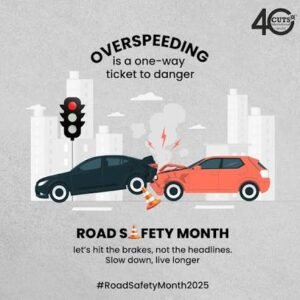
    Every day, millions of people leave home slightly late, glance at the clock and press the accelerator a little harder. It feels harmless. They tell themselves they are skilled, the road is clear and they will make up the time. Most days, nothing happens. But on the day something does, there is no second chance.

    Overspeeding: Is Saving Five Minutes Worth Risking Your Life?Overspeeding is one of the leading causes of road accidents in India. At Next Wheel Driving School, we believe understanding why speed is dangerous is the first step to controlling it.

    The Physics You Cannot Argue With

    Speed does not just make a crash more likely. It makes every crash worse. Here is why:

    • Stopping distance grows quickly. When you double your speed, the distance your vehicle needs to stop becomes much more than double. Your reaction time covers more road, and your brakes need more distance to bring the vehicle to a halt.
    • Impact force rises sharply. The energy of a collision increases with the square of the speed. A crash at 80 km/h is not twice as bad as one at 40 km/h, it is far worse.
    • Control is reduced. At high speed, a sudden swerve, a pothole or a wet patch can easily make a vehicle skid or overturn.
    • Your field of vision narrows. The faster you drive, the less you can take in at the edges of your view. A child stepping off the footpath or a vehicle joining from a side road becomes much harder to notice.

    Understanding Reaction Time

    A typical driver takes about one second to notice a hazard and begin braking. That sounds tiny, but in that single second, a car at 60 km/h travels nearly 17 metres,Overspeeding: Is Saving Five Minutes Worth Risking Your Life before the brakes even start working. Add a little distraction, tiredness or poor light, and the distance grows.

    This is why speed limits are not arbitrary numbers. They are set according to road design, traffic density and the likelihood of pedestrians, so that drivers have enough time and space to react.

    Where Speed Is Especially Dangerous

    Some places demand extra caution, no matter how empty the road looks:

    • Near schools, hospitals and markets, where children, elderly people and crowds can appear suddenly
    • Curves and turns, where you cannot see what is ahead
    • Intersections, where vehicles and pedestrians cross from different directions
    • Residential lanes, where children play and animals wander
    • Wet or damaged roads, where tyres lose grip
    • At night, when visibility is limited and your headlights show only a short stretch of road

    The “I’m a Good Driver” Trap

    Experienced drivers are often the most overconfident about speed. They have driven fast many times without incident, so the risk feels imaginary. But skill cannot cancel physics. No driver, however talented, can stop a vehicle in zero distance or predict what another person on the road will do.

    Confidence is useful. Overconfidence is dangerous.

    Overspeeding: Is Saving Five Minutes Worth Risking Your Life

    What Do You Really Gain by Speeding?

    Let us do some simple maths. Suppose you are travelling 10 kilometres across the city. At an average of 40 km/h, the trip takes 15 minutes. At 60 km/h, it takes 10 minutes. You have saved five minutes, but you have taken on much greater risk, burned more fuel, increased wear on your vehicle and made your journey more stressful.

    In city traffic, the real gain is often even smaller, because signals, junctions and congestion limit how far ahead you can actually get.

    Practical Tips to Control Your Speed

    1. Start earlier. Most speeding comes from lateness. Leaving ten minutes sooner removes the pressure.
    2. Follow the limits. Posted speed limits are there for good reason. Watch for signboards, especially when the limit changes.
    3. Keep a safe following distance. Stay far enough behind the vehicle ahead to stop safely if they brake suddenly.
    4. Slow down in bad conditions. Rain, fog, dust and darkness all call for lower speeds.
    5. Use your mirrors and scan ahead. Smooth, anticipatory driving is faster and safer than sudden bursts of speed.
    6. Do not race or compete. Another driver’s impatience is not your problem to solve.
    7. Take breaks on long drives. Fatigue makes you drift into higher speeds without noticing.

    A Word to Young Drivers

    For many young people, speed feels exciting and is sometimes linked to showing off in front of friends. But the road is not a racetrack, and no stunt is worth a life. Real skill lies in control, patience and awareness, not in how fast you can go.

    A Word to Parents

    Children learn from what they see. If they watch you speed, overtake dangerously or lose your temper in traffic, they will copy it when they begin to drive. Be the driver you want them to become.

    The Legal Reality

    Overspeeding is a traffic offence, and penalties can include fines and, for repeated violations, action against your licence. But the real penalty is not on paper. It is the possibility of hurting someone, or yourself, in a way that cannot be undone.

    Our Message from Next Wheel

    A good driver is not the one who reaches first. A good driver is the one who reaches safely, every single time. At Next Wheel Driving School, we train learners to build speed judgment from the very first lesson, so that caution becomes second nature.

    The next time you feel the urge to hurry, ask yourself one question: “Is saving a few minutes worth risking everything?” The answer is always no.

    Learn to drive with confidence and control. Join Next Wheel Driving School today.
  • Helmets and Seat Belts

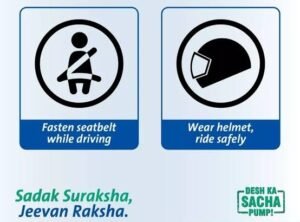
    Many of us put on a helmet or fasten a seat belt only when we spot a traffic police officer ahead. In reality, these two things aren’t for the police. They’re for your family.

    Helmets and Seat BeltsHelmets and Seat Belts

    Choosing the right helmet:

    • Look for the ISI mark. A certified helmet has been tested for impact resistance. A cheap, uncertified one is little better than a plastic bowl.
    • Get the right fit. The helmet should sit snugly, without wobbling or pressing painfully on your forehead.
    • Replace it after a serious fall. The protective foam inside can be damaged even if the outside looks fine.
    • Check the visor. A scratched or tinted visor reduces visibility, especially at night.

    The Strap Is Part of the Helmet

    One of the most common mistakes we see is a helmet worn without fastening the chin strap. In an accident, an unbuckled helmet can fly off before it does its job. Wearing it unfastened is almost the same as not wearing it at all.

    Why a helmet matters: For two-wheeler riders, head injuries are the most likely to be fatal. A good quality ISI-marked helmet greatly reduces the risk of serious head injury. Fastening the chin strap matters just as much, otherwise the helmet will simply come off in a crash.

    Why a seat belt matters: In sudden braking or a collision, a seat belt keeps you from hitting the steering wheel or windshield. It’s just as important for passengers in the back seat.

    Remember:

    • The pillion rider should wear a helmet too
    • Use properly sized safety restraints for children
    • Make buckling up a habit before you start the engine

    At Next Wheel, we teach safety habits from day one, because a good driver is one who arrives safely.

  • Hello world!

    Welcome to WordPress. This is your first post. Edit or delete it, then start writing!